
Why Altcoins Matter: The Truth Behind Bitcoin's Alternatives
15 April 2026
8 min for read

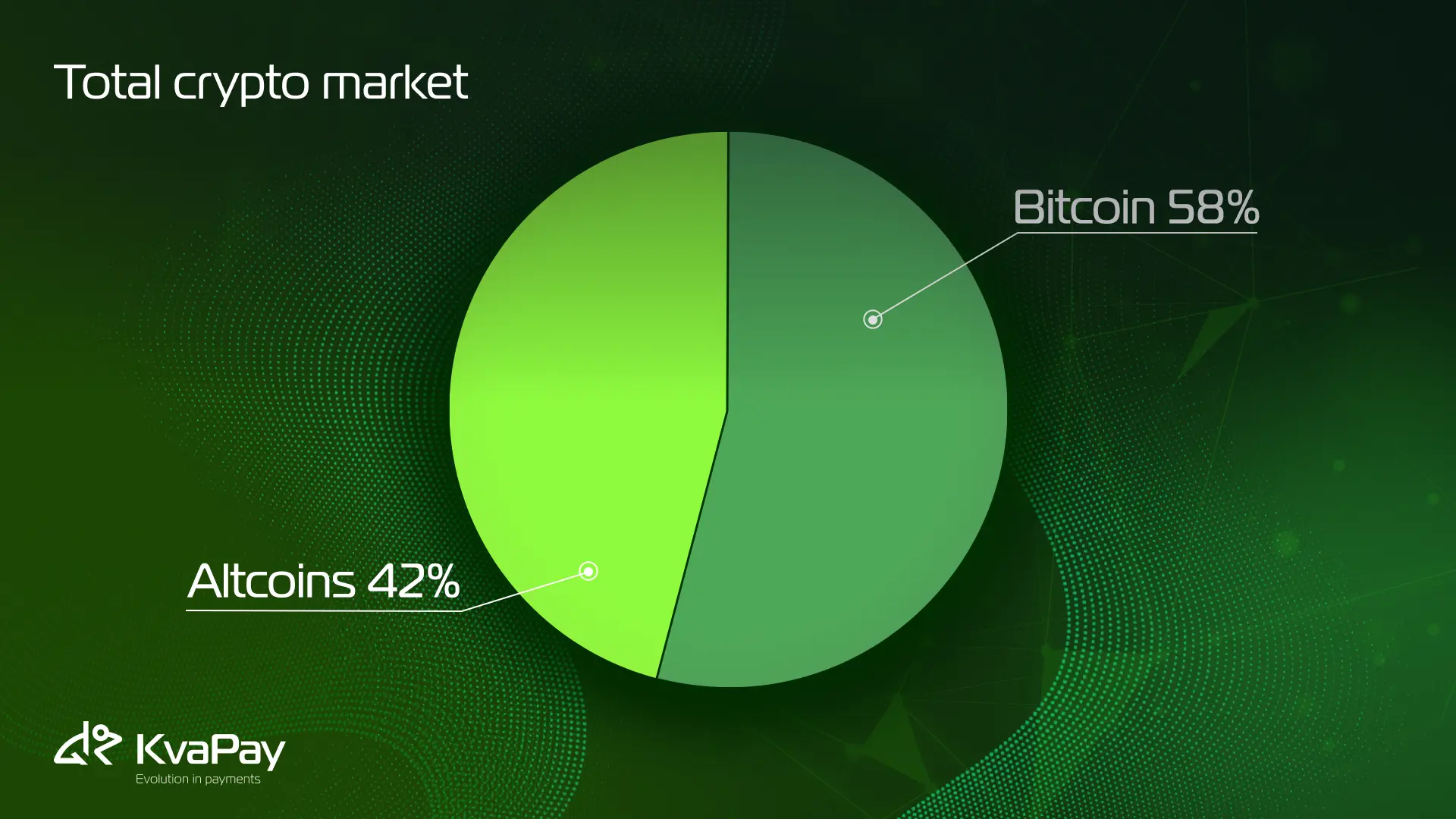
When exploring the best altcoins, we need to understand their fundamental meaning first. Altcoins include every cryptocurrency that isn't Bitcoin, offering diverse features like smart contracts, stable value, or faster transaction speeds. Many top altcoins were specifically created to address existing needs, which explains why some have witnessed remarkable growth. Bitcoin is often viewed as a store of value, especially during inflation or market uncertainty. Altcoins typically serve more specialized functions.
In this comprehensive guide, we'll explore what makes altcoins different from Bitcoin, examine their various types, and help you understand why they matter in the evolving cryptocurrency ecosystem of 2026.
What are altcoins and how are they different from Bitcoin?
The term "altcoin" blends "alternative" and "coin," encompassing all cryptocurrencies that aren't Bitcoin. In fact, this classification spans thousands of digital assets, each with its own purpose and underlying technology. Although some interpretations exclude Ethereum from this category due to its prominence, most cryptocurrency enthusiasts consider it the best-known altcoin.
Altcoins meaning and origin
The concept of altcoins emerged shortly after Bitcoin established itself as the pioneer cryptocurrency. Litecoin, created in 2011, holds the distinction of being the first altcoin. As a fork from the Bitcoin blockchain, it introduced a different proof-of-work consensus mechanism called Scrypt, which proved less energy-intensive and quicker than Bitcoin's SHA-256 approach.
Since then, the crypto landscape has transformed dramatically. Bitcoin maintains its status as 'digital gold,' yet tens of thousands of tokens have been created representing the rest of this decentralized ecosystem. Many altcoins were specifically crafted to address perceived limitations in Bitcoin's design or to introduce entirely new functionalities.
Bitcoin vs altcoins: core differences
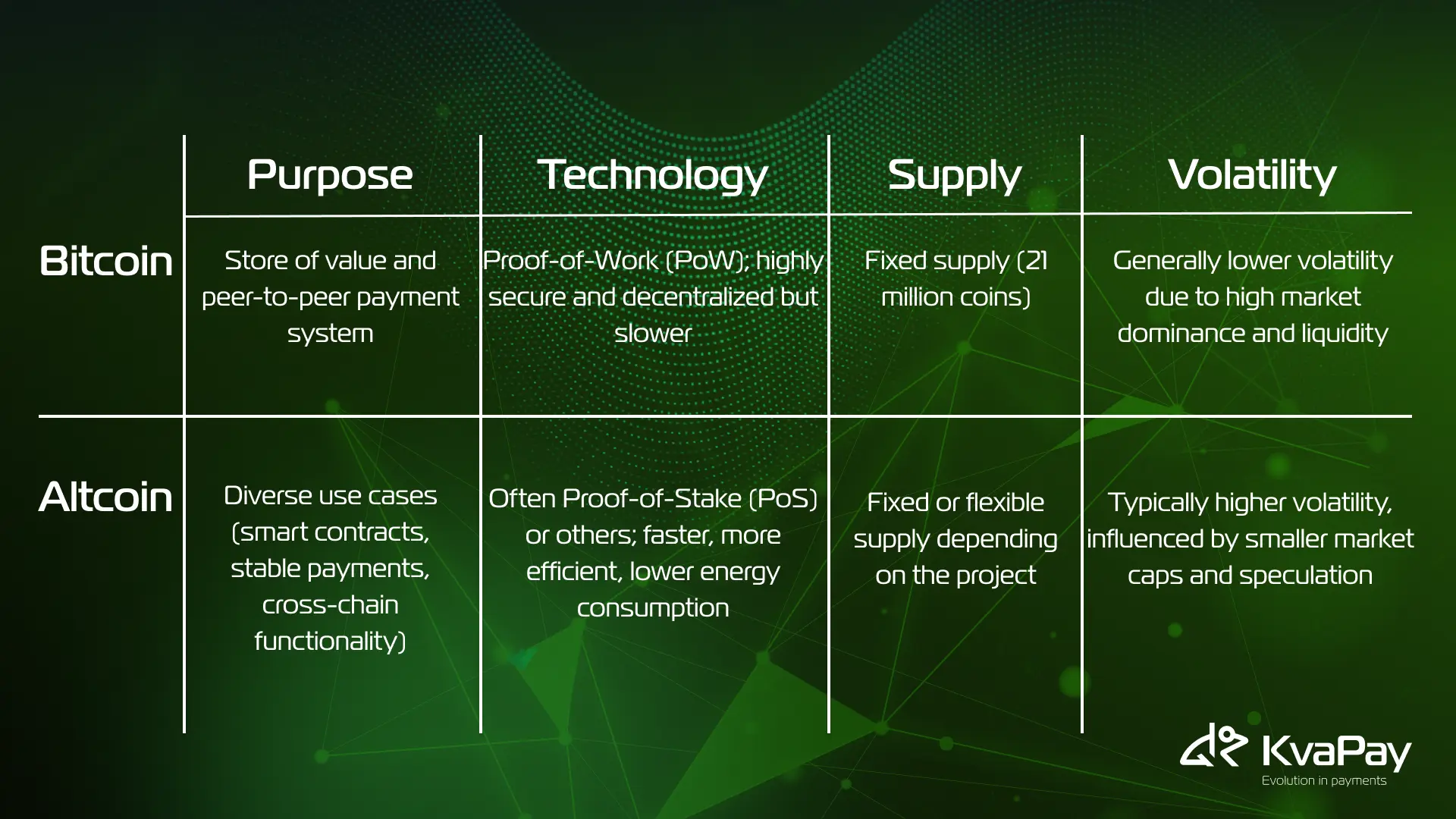
Bitcoin and altcoins differ in several fundamental ways:
Why altcoins emerged after Bitcoin
Altcoins developed after Bitcoin for numerous compelling reasons. First of all, they aimed to overcome specific limitations in Bitcoin's implementation. Furthermore, developers recognized opportunities to introduce new technologies like smart contracts, which Bitcoin wasn't designed to support.
Additionally, altcoins allow for innovation and experimentation with various consensus mechanisms and governance models, expanding the boundaries of what's possible in decentralized finance. Many also focus on specific industries or use cases, from healthcare to gaming.
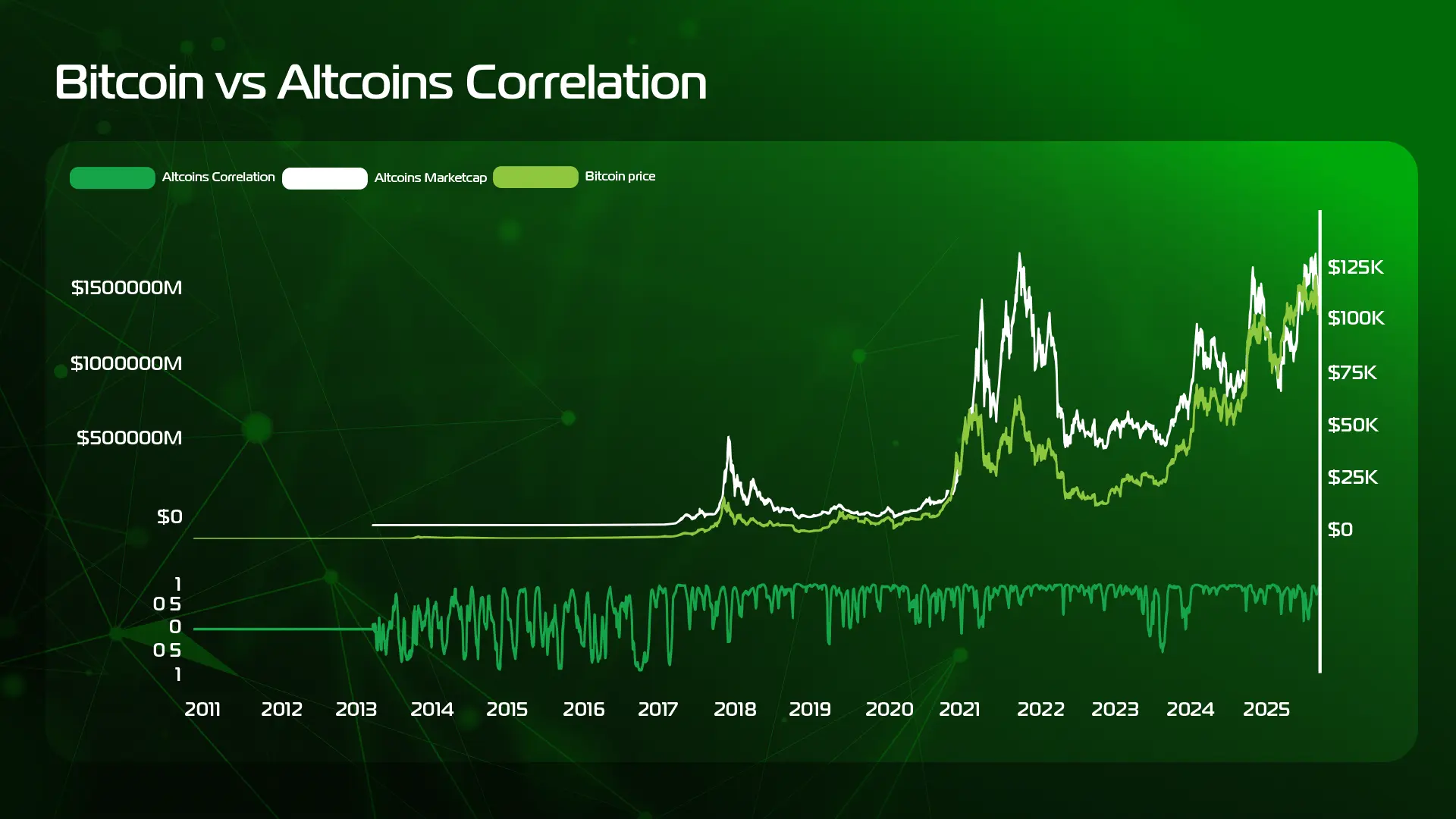
Historically, altcoin movements often follow Bitcoin's price patterns. When Bitcoin consolidates after significant gains, investors frequently seek higher potential returns in the altcoin market. This relationship highlights Bitcoin's role as the market leader whose movements typically set the tone for the entire cryptocurrency sector.
Types of altcoins and what they do
The cryptocurrency ecosystem has evolved beyond Bitcoin to include various types of altcoins, each serving unique functions within the blockchain space.
Platform coins (e.g., Ethereum, Solana)
Platform coins power blockchain networks that support decentralized applications. Ethereum, launched in 2015, transitioned from Proof of Work to Proof of Stake in 2022 and supports DAOs, NFTs, and DeFi applications. Meanwhile,
Solana, introduced in 2020, processes up to 65,000 transactions per second and gained 263% in value during 2024. With 2.8 million daily active users as of January 2026, Solana has established itself as a high-performance alternative focusing on speed and low costs.
Stablecoins (e.g., USDT, USDC)
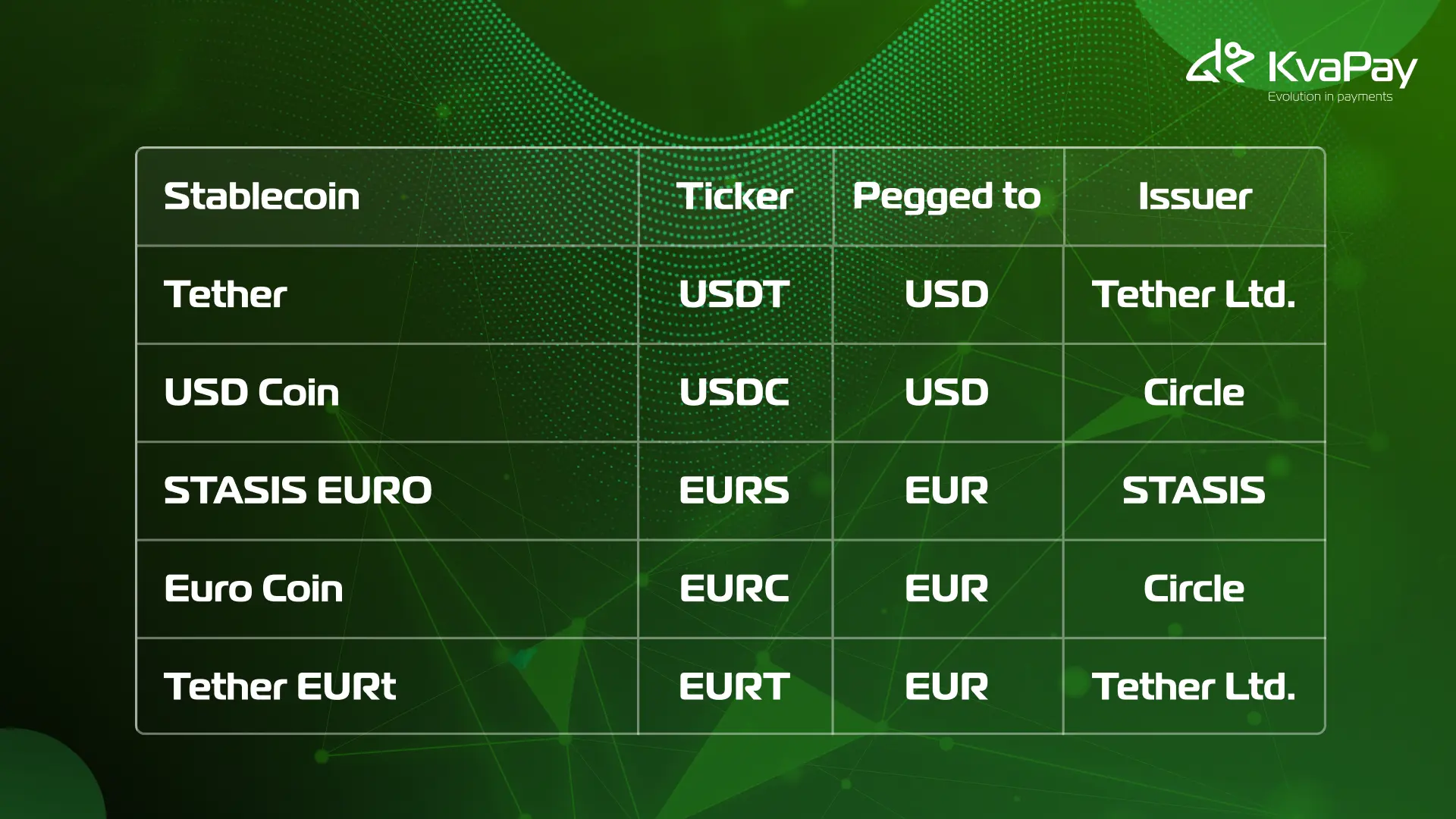
Stablecoins serve as a bridge between traditional finance and cryptocurrency, maintaining value pegged to assets like the US dollar. Tether (USDT) dominates with approximately two-thirds of market share, followed by USD Coin (USDC), known for its regulatory compliance. Notably, these tokens enable 24/7 cross-border transactions and function as "cash" within crypto trading.
Utility tokens (e.g., Chainlink, Filecoin)
Utility tokens provide access to specific services within blockchain ecosystems. Unlike payment tokens, they derive value from their functionality rather than as currency. For instance, Chainlink (LINK) powers oracle services connecting smart contracts with real-world data, whereas Filecoin (FIL) facilitates decentralized storage.
Governance tokens (e.g., Uniswap, Maker)
Governance tokens grant holders voting rights over protocol decisions, creating truly decentralized systems. Through these tokens, communities vote on crucial upgrades, treasury allocations, and strategic decisions. MakerDAO's MKR token, as an example, allowed holders to vote on adding Real-World Assets as collateral.
Meme coins and community-driven tokens
Meme coins originated from internet culture and humor, with Dogecoin, Shiba Inu, and Pepe being the most recognized examples. Though often lacking utility beyond trading, these tokens can amass significant value through social momentum.
Ready to explore altcoins? Buy them securely on KvaPay and store them safely in your KvaPay Wallet.
How altcoins are changing the crypto space
Beyond their growing numbers, altcoins are actively reshaping the cryptocurrency landscape through technological innovations that address Bitcoin's limitations.
Smart contracts and decentralized apps
Smart contracts have emerged as one of the most transformative features of altcoins. These self-executing contracts eliminate intermediaries from transactions, functioning like digital vending machines - payment goes in, product comes out, with no human interaction needed. Ethereum pioneered this technology, extending blockchain capabilities far beyond digital currency. As a result, developers can now build decentralized applications (dApps) that disrupt traditional finance by lowering costs and reducing barriers to financial services.
Cross-chain interoperability
Cross-chain technology creates bridges connecting different blockchain networks, establishing standard communication protocols that enable them to understand each other's data. This connectivity breaks down barriers between chains, allowing assets to flow freely between them. Consequently, fragmented liquidity pools can be unified across multiple networks. In essence, cross-chain interoperability creates a collaborative environment that encourages innovation by enabling different blockchain networks to share resources.
Faster and cheaper transactions
Many altcoins offer significantly faster and less expensive transactions than Bitcoin. Primarily, this is achieved through innovative blockchain designs and consensus mechanisms. Alephium, for instance, speeds up transactions through sharding via its BlockFlow algorithm. Likewise, Layer 2 solutions like Arbitrum and Optimism scale Ethereum by processing transactions off-chain before sending them to the main network.
New consensus models like Proof of Stake
Proof of Stake (PoS) revolutionizes how cryptocurrencies process transactions by utilizing randomly selected validators rather than the computationally intensive process seen in Bitcoin's Proof of Work. Indeed, Ethereum's switch to PoS reduced its energy consumption by 99.84%, addressing major sustainability concerns. Additionally, PoS mitigates risks of a 51% attack by making it prohibitively expensive to control the majority of staked cryptocurrency.
What to consider before buying altcoins
Buying altcoins requires careful consideration of several key factors to maximize potential returns while minimizing risks. Let's explore what savvy investors analyze before committing their funds to cryptocurrency alternatives.
Understanding tokenomics and supply
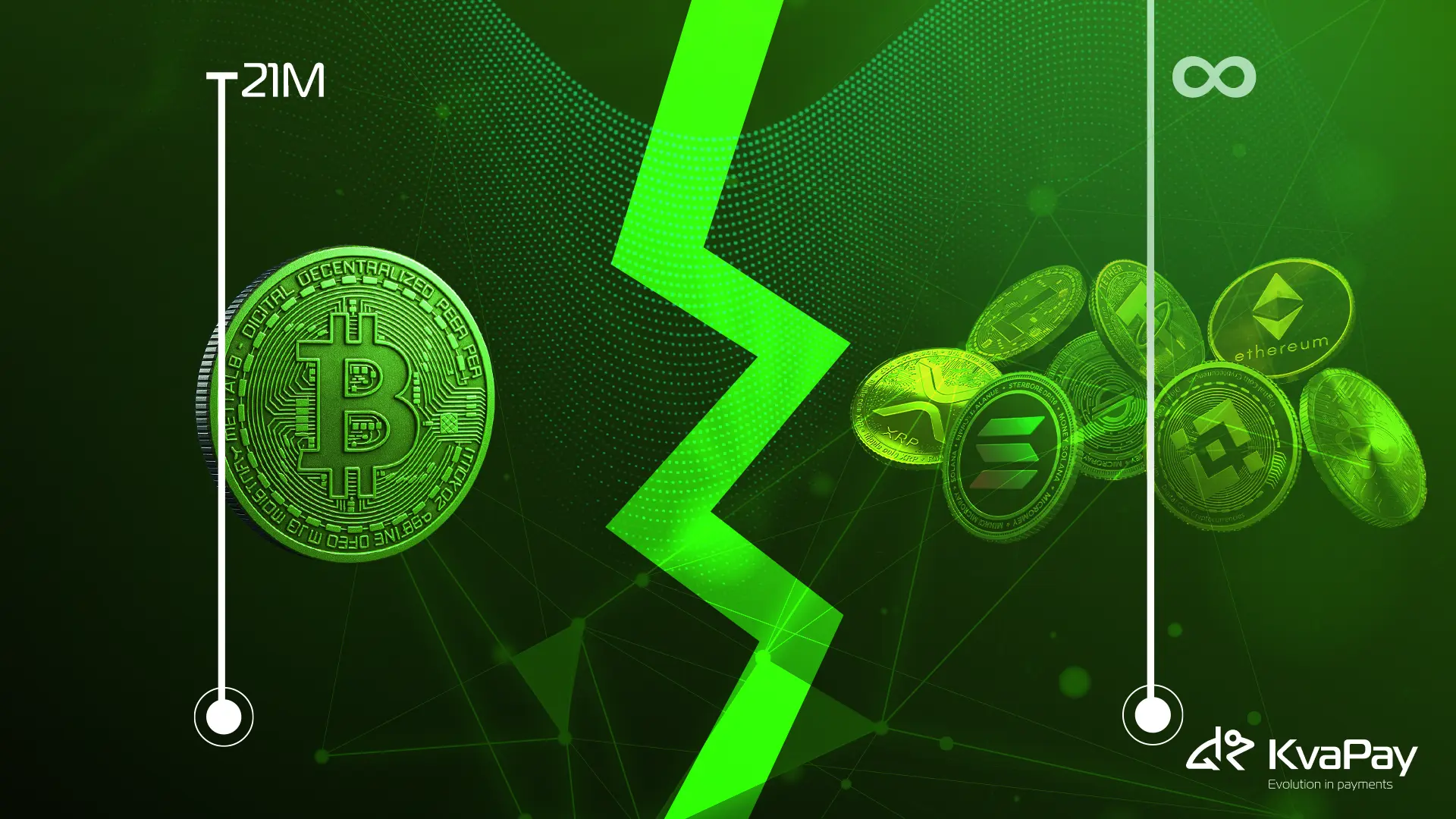
Tokenomics—the economic design of a cryptocurrency—serves as the foundation for any altcoin investment. First of all, examine the token's supply mechanisms: whether it has a fixed maximum supply like Bitcoin's 21 million cap or an unlimited supply model. Moreover, consider the token distribution; projects where large percentages are allocated to the team or investors often represent red flags. Ultimately, a token's utility determines its long-term value. Those with clear use cases like paying transaction fees or governance rights typically maintain stronger demand.
Evaluating the team and roadmap
Behind every successful altcoin stands a capable team with a clear vision. Examine team members' backgrounds and experience in blockchain technology, software development, or relevant fields. Transparency in communication about development progress and treasury spending adds significant credibility. Alongside the team, assess the project's roadmap for realistic milestones and consistent delivery on promised goals.
Regulatory risks and market volatility
Regulatory challenges pose serious threats to altcoin investments. The SEC v. Ripple case demonstrates how legal battles can severely impact token prices regardless of fundamentals. Naturally, altcoins experience higher volatility compared to Bitcoin, often following Bitcoin's price patterns but with more dramatic swings.
Choosing the best altcoins for your goals
Select altcoins based on your risk tolerance, time horizon, and investment approach. There's no single coin suitable for everyone. Consider diversifying across multiple projects to reduce overall exposure to any single altcoin's risks.
Start your altcoin investment journey today! Buy and store your chosen altcoins on KvaPay for a seamless experience.
Conclusion
Altcoins have established an important role in the cryptocurrency ecosystem alongside Bitcoin. While Bitcoin is mainly seen as digital gold and a store of value, altcoins often serve more specific purposes, such as smart contracts, stable value, or faster transactions.
At the same time, altcoins should be approached carefully. Although some projects bring real innovation, many altcoins are created with weak fundamentals or even fraudulent intent, and a large number fail or disappear within a short time. For this reason, investors need to choose carefully and do their own thorough research before investing.
Altcoins can drive innovation through new consensus mechanisms, decentralized applications, and specialized use cases, but their potential does not guarantee success. Careful selection and informed decision-making are essential.